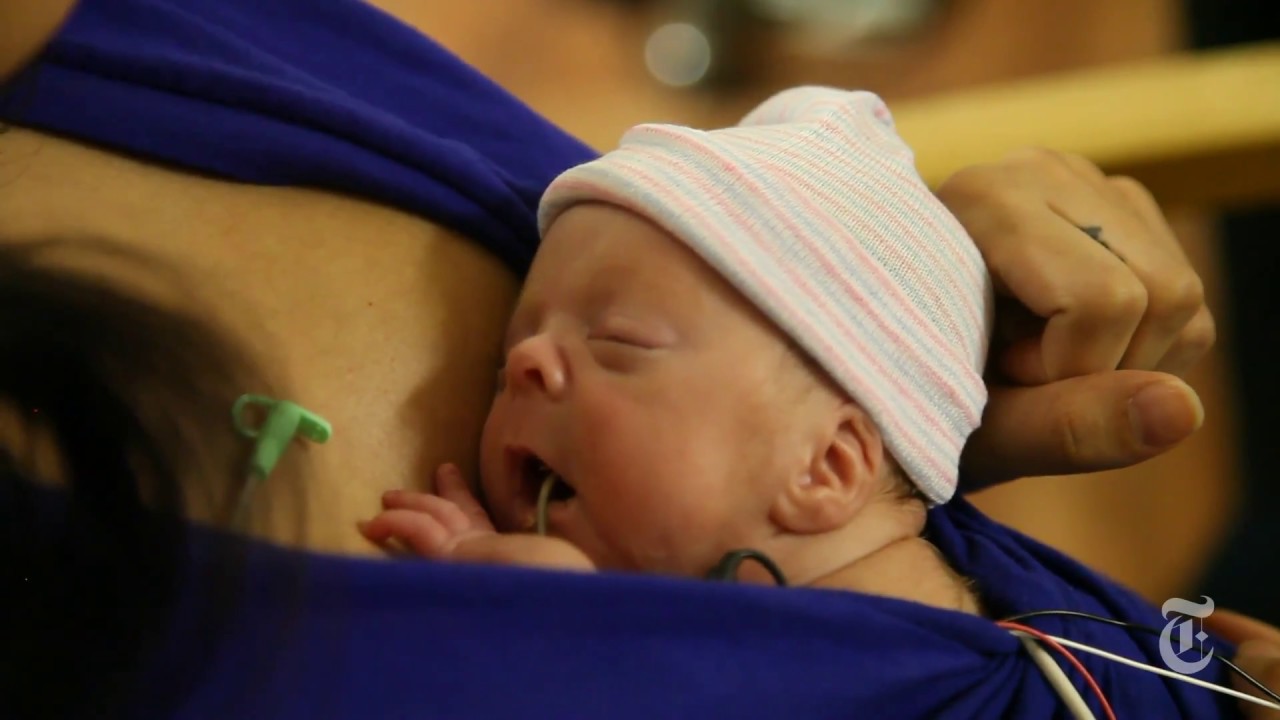
NICU Music Therapy Services
Fetal hearing capacity is noted to develop in the womb at approximately 19 weeks gestation. The womb is known to be full of sound, such as the mother's heartbeat, the movement of fluid in the uterus, and the flow of blood through the placenta. The use of music and music therapy with infants who, for various reasons, leave the womb environment prematurely, can provide a bridge to familiar sounds of the womb and be beneficial in many ways.
Music therapy services provided by expertly trained members of the Louis and Lucille Armstrong Music Therapy team utilizes live sound and music to replicate the auditory environment found in the womb. By re-creating a womb-like environment through sound and music, music therapy has been shown to deepen infant sleep-state, support infant self-regulation, assist in the stabilization of breathing and heart rates, enhance parent/infant bonding, sooth irritability, re-enforce feeding/sucking rhythms and weight gain, and promote a sense of safety during painful procedures.
Premature infants hospitalized in the NICU (Neonatal Intensive Care Unit) due to complex medical needs, music therapy interventions may include:
- Contingent singing
- Playing harmonic and melodic instruments to provide a “blanket of sound,”
- Tonal-vocal holding
- Songs sung by family
- Lullabies
These interventions provide comfort, stability, and promote bonding. Music therapy establishes social connections, fosters healing via self-regulation, and addresses the developmental, physical, and emotional needs of infants.
Clinical Services in the NICU
Many families of NICU infants experience stress, trauma, and anxiety in relation to their infant’s hospitalization. Music psychotherapy interventions for families of NICU infants encourage and support the caregiver-infant bonding process, offer a means of coping, supply a tangible way for caregivers to connect to their infant through songwriting/creating, and provide respite for the families. We offer a variety of services in the NICU including:
- Bi-weekly groups for new parents and caregivers, informing families about how music can be effectively used for transitions, motoric play, enhancement of crying/comfort sounds, separations/sleep, feeding, enhancement of quiet-alert and sleep states, as well as bonding
- Bonding experiences for parents of newborns through the creative use of womb sounds (placenta sounds and heart rhythms) as well as parent-made lullaby tapes for babies
- Daily individual music therapy sessions at the bedside for infants and/or caregivers
- Environmental Music Therapy (EMT), using live music to address a sometimes chaotic intensive care environment, helping to create a less tense atmosphere
- Pain Management: procedural music therapy using live music to support infants undergoing blood-draws, needle sticks, suctioning, pre-/post-operative pain and anxiety, and more. Release/entrainment and/or relaxation/meditation with live music is provided to ease pain that may be experienced
Enroll in Our Study
Since 2016, our specialist-level music therapy team has lead several other sites in a study investigating the effects of music therapy interventions for babies diagnosed with Neonatal Abstinence Syndrome (NAS).
Utilizing the interventions tested in our 2013 study published in Pediatrics with additional interventions, our team is looking at the effect of music therapy on infants weaning from opioids through intrauterine exposure or post-natal exposure. Prior research conducted by this department in the NICU includes “The Effects of Music Therapy on the Sound Environment in the NICU: A Pilot Study.” For more information, please visit our research page or contact Marie Grippo at 212 420-2704 for enrollment.