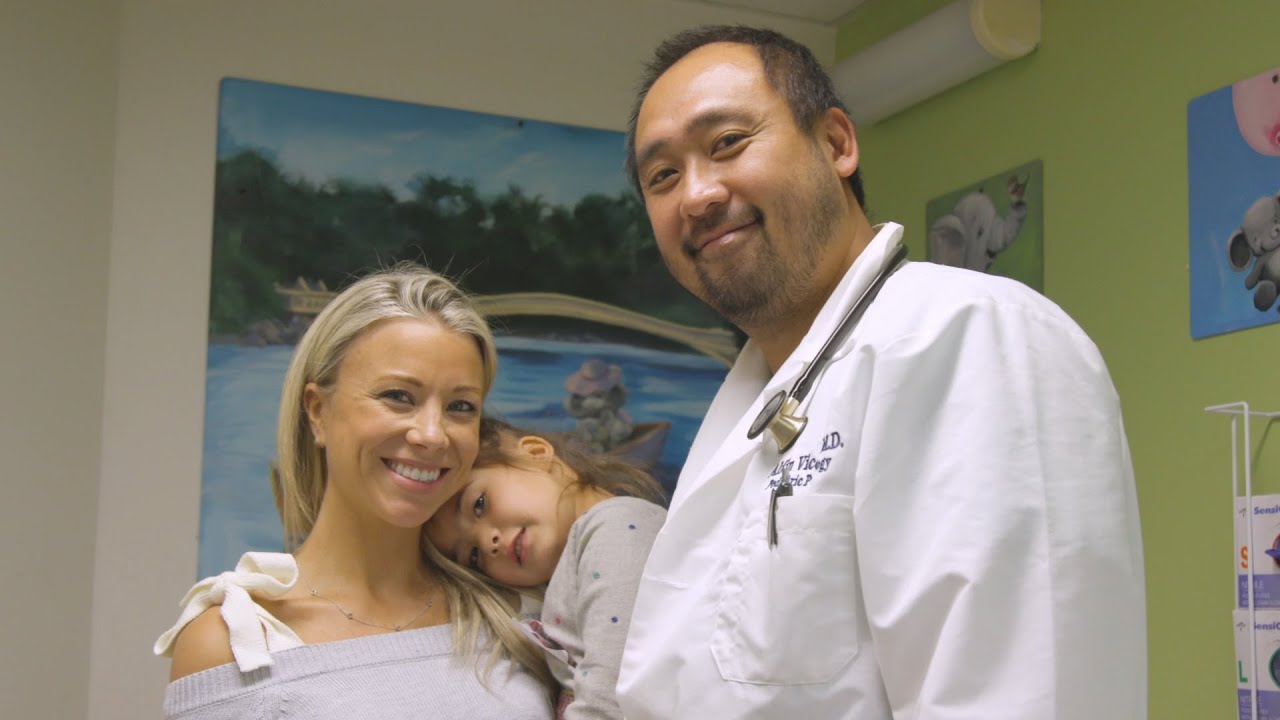
Mount Sinai Kravis Children’s Hospital Epilepsy Monitoring Unit (EMU) earns coveted ABRET accreditation
Thanks to Mount Sinai’s Pediatric Epilepsy Team, Baby Aaliyah got the life-saving care that she needed.

2024 Mount Sinai Kravis Children’s Hospital Specialty Report
Mount Sinai Kravis Children’s Hospital is ranked among the nation’s top children’s hospitals for providing specialty clinical care to infants, children, adolescents, and young adults.

Unsure What to Do When You're Not Feeling Well?
Take our symptoms assessment and view your care options with our new Check Symptoms & Get Care tool

Pediatric Telemedicine Appointments
We are proud to offer virtual care appointments for certain visit types with our pediatricians, in a multitude of specialties.

We Stand United In Solidarity
Find out how the Mount Sinai community is advocating against bias and racism.

Update on the Novel Coronavirus (COVID-19)
Read about Mount Sinai Health System's response to this newly discovered disease, and what you need to know.

Adolescent Health Resources
Find information for teens and young adults on COVID-19, stress, relationships, puberty and more

Mount Sinai Parenting Center
COVID-19 resources designed for parents and healthcare workers.

Introducing Children’s Heart Center
Offering outstanding, compassionate care from the earliest heartbeat through childhood and beyond

Mount Sinai Kravis Children’s Hospital
Family Centered Care
Pediatrics
Pediatrics
The Mount Sinai Health System offers family-centered care, with personalized treatment plans designed to meet your child’s specific needs. Our dedicated pediatric physicians apply state-of-the-art diagnostics and the latest multidisciplinary advances in therapy and technology to treat conditions ranging from basic to complex. Our ability to deliver outstanding care is informed by cutting edge clinical/translational and basic biomedical research ongoing by our investigators.
Our flagship facility, Mount Sinai Kravis Children’s Hospital provides state-of-the-art diagnosis, treatment, and follow-up care to infants, children, and adolescents. Kravis is listed among the country’s top children’s hospitals by U.S. News & World Report in its 2023-24 “Best Children’s Hospitals” rankings. Our most highly ranked specialties are diabetes and endocrinology, gastroenterology and GI surgery, nephrology, and neurology and neurosurgery.
In addition, Mount Sinai Children’s Heart Center gives children in the New York metropolitan area access to the expertise from the earliest heartbeat through childhood and beyond. We treat congenital heart defects and pediatric heart conditions in children of all ages, including the most complex, offering the most effective treatment and compassionate care.
Diversity and Inclusion
The Mount Sinai Health System’s Jack and Lucy Clark Department of Pediatrics and Kravis Children’s Hospital stands firmly for diversity, equity, and inclusion, and against all forms of bias, discrimination, and hatred. Our United in Solidarity website seeks to connect, inform, and engage the Mount Sinai community on issues pertaining to Black Lives Matter and efforts to instill an anti-racist culture.
Pediatrics at Mount Sinai Health System


Adolescent Health
We offer comprehensive, integrated medical and mental health services and prevention education for ages 10 to 22.
Learn More
Pediatric and Adolescent Gynecology
Personalized, compassionate gynecologic care from infancy through early adulthood.
Learn More
Pediatric Anesthesia
We provide anesthesia to keep your child safe before, during, and after surgical procedures of all types.
Learn More
Pediatric Allergy and Immunology
We provide treatment, counseling, and support for infants, children, and teens with allergies and immune disorders.
Learn More

Pediatric Dermatology
We treat a variety of pediatric and adolescent skin conditions including acne, atopic dermatitis, psoriasis, warts, and vascular birthmarks.
Learn More
Developmental Pediatrics
We provide multidisciplinary care to children with complex developmental-behavioral disorders.
Learn More
Pediatric Emergency Care
During critical health emergencies, our specialty trained pediatric emergency doctors are available 24-hours a day, seven days a week to care for infants and children.
Learn More
Environmental Pediatrics
We provide medical and coordinated services for children with known or suspected asthma triggers or other harmful environmental exposures.
Learn More
Pediatric Gastroenterology
Our expert practitioners are highly skilled in diagnosing and treating a wide range of digestive disorders that affect children.
Learn More
Pediatric Ear, Nose, and Throat
We manage common and complex disorders in children, from ear infections to hearing loss.
Learn More
Pediatric Endocrinology and Diabetes
We provide individualized, family-centered care to children with a wide range of endocrine system needs.
Learn More
General Pediatrics
With preventive and sick care available on an outpatient or inpatient basis, we are available 24 hours a day for you and your child.
Learn More
Genetics
We specialize in screening, diagnosing, treating, and counseling families who may have genetic disease, birth defects, reproductive problems, or cancer risks.
Learn More
Pediatric and Congenital Cardiology - Children’s Heart Center
Our multi-disciplinary team of cardiologists, heart surgeons, and interventionalists provide innovative, and personalized care for the most com-plex congenital heart defects from fetal life through adulthood, as well as transcatheter treatment of many defects and arrhythmias.
Learn More
Pediatric Hematology-Oncology
We provide effective, life-saving treatment to children with blood diseases and other types of cancer.
Learn More
Pediatric Infectious Diseases
We diagnose and treat children with all kinds of serious or recurrent infections and related conditions, from Lyme disease to tuberculosis to HIV.
Learn More
Pediatric Kidney Disease
We specialize in family-centered care for children with kidney disease, high blood pressure, urinary tract infections, and related conditions.
Learn More
Pediatric Liver Diseases
We treat children and adolescents with acute and chronic liver disease.
Learn More
Pediatric Liver Transplant
We specialize in treating small children and performing liver transplants.
Learn More
Pediatric Neurology
We diagnose and treat a wide range of disorders related to nerves and the nervous system of children.
Learn More
Pediatric Neurosurgery
Mount Sinai neurosurgeons have pioneered minimally invasive procedures to treat neurological conditions in children.
Learn More
Newborn Medicine
Our neonatologists, pediatric subspecialists, and pediatric surgeons provide care with a family-centered approach.
Learn More
Pediatric Ophthalmology
We offer expertise in diagnosing and treating children with all types of eye conditions.
Learn More
Pediatric Orthopedics
We provide the full range of surgical and nonsurgical treatment for pediatric orthopedic conditions from a simple fracture to scoliosis.
Learn More
Pediatric Palliative Care
Our interdisciplinary team strives to enhance comfort and symptom relief for children and provide support for their families.
Learn More
Pediatric Plastic Surgery
We fix deformities caused by birth defects, injuries, and illnesses.
Learn More
Pediatric Psychiatry
We offer psychiatric evaluation, individual and group psychotherapy for children, parental counseling, family counseling, group therapy for family members, and pharmacotherapy.
Learn More
Pediatric Pulmonology
We treat the full spectrum of chronic respiratory conditions in children, and can offer secondary evaluations to patients with complex airway diseases.
Learn More
Pediatric Radiology
We work with referring doctors to select the most appropriate imaging study for your child’s condition.
Learn More
Pediatric Rehabilitation Medicine
At Mount Sinai, our pediatric rehabilitation medicine team understands that every child is unique, and so are their needs when it comes to physical rehabilitation and well-being.
Learn More
Pediatric Rheumatology
When children or adolescents experience pain in the musculoskeletal system (joints, muscles, bones, or tendons), they may have a rheumatic disease. We treat young people with a variety of therapies, so that they may lead full and active lives.
Learn More
Pediatric Surgery
We perform the most advanced minimally invasive techniques, making all procedures as comfortable as possible for children and families.
Learn More
Pediatric Urology
Treating infants as young as 8 months, children, and adolescents with urinary conditions
Learn More-
Mount Sinai Doctors Faculty Practice Pediatrics
5 East 98th Street, 10th Floor New York, NY 10029
Phone:
-
Mount Sinai Kravis Children’s Hospital
1184 Fifth Avenue New York, NY 10029
Phone:
-
Mount Sinai Queens
Mount Sinai Queens Pavilion, 25-20 30th Avenue, Fourth Floor Astoria, NY 11102
Phone:
-
Mount Sinai West
425 West 59th Street, 8B New York, NY 10019
Phone:
-
Mount Sinai Doctors - Brooklyn Heights (Pediatrics)
300 Cadman Plaza West Brooklyn, NY 11201
Phone:
-
New York Eye and Ear Infirmary of Mount Sinai
310 E. 14th Street South Building, 3rd Floor New York, NY 10003
Phone:
-
Mount Sinai Doctors Faculty Practice Pediatrics
5 East 98th Street, 10th Floor New York, NY 10029
Phone:
-
Mount Sinai Queens
Mount Sinai Queens Pavilion, 25-20 30th Avenue, Fourth Floor Astoria, NY 11102
Phone:
-
Mount Sinai Doctors - Brooklyn Heights (Pediatrics)
300 Cadman Plaza West Brooklyn, NY 11201
Phone:
-
Mount Sinai Kravis Children’s Hospital
1184 Fifth Avenue New York, NY 10029
Phone:
-
Mount Sinai West
425 West 59th Street, 8B New York, NY 10019
Phone:
-
New York Eye and Ear Infirmary of Mount Sinai
310 E. 14th Street South Building, 3rd Floor New York, NY 10003
Phone:


Scientists Develop Novel Approach to Enhance Drug Delivery for Brain Tumors in Children
Mar 02, 2023 View All Press Releases